
Introduction: What You’ll Learn
Senior living facilities are designed to be supportive and comfortable for older adults. But one hidden factor that influences resident well-being every single day is indoor air quality (IAQ).
In this article, you’ll learn:
• Why IAQ and allergen reduction matter more in senior living facilities.
• How evidence-based and human-conscious design approaches can improve resident well-being.
• Which product categories make a significant difference in air quality and health.
• Examples of Certified Asthma & Allergy Friendly® products already making an impact in senior living settings.
• How facility managers, procurement teams, and families can use certification as a trustworthy guide.
Why Indoor Air Quality Matters for Seniors
According to the U.S. EPA, Americans spend about 90% of their time indoors, and older adults often spend even more. This makes seniors particularly vulnerable to airborne pollutants and allergens. Chronic conditions such as asthma, COPD, and heart disease are more common in this age group, and poor indoor air quality can aggravate these health issues.
Volatile organic compounds (VOCs) from paints or flooring, particulate matter from dust or cleaning, and allergens like mold or dust mite allergen all accumulate indoors. Without effective controls, these hidden exposures can affect respiratory comfort, sleep quality, and overall wellbeing.
Poor indoor air quality may adversely affect not only health and wellbeing, but also contribute to higher staff absenteeism and increased dissatisfaction among families making care decisions. That’s why IAQ must be treated as a foundational design and operational priority in senior living.
Design Approaches That Support Aging Well
Evidence-Based Design
First developed in healthcare settings, evidence-based design uses scientific research to guide decisions about the built environment. In senior living facilities, this means:
• Choosing low-emitting materials that won’t add VOCs to the air.
• Optimizing ventilation strategies.
• Prioritizing flooring, bedding, and finishes that are easy to clean and maintain.
• Incorporating independently certified products tested under real-world conditions.
By integrating research-backed solutions, designers and procurement teams can make smarter decisions about materials, creating measurable improvements in resident comfort and staff performance, while reducing environmental triggers that may contribute to health complications.
Human-Conscious Design
In care environments, the choices made in products and materials shape not just buildings, but daily life. Human-conscious design emphasizes empathy and lived experience, placing residents’ comfort, dignity, and health at the center of decision-making. This approach represents a shift away from a purely engineering-driven mindset toward one that asks deeper questions:
- How does this choice influence the everyday experience of residents?
- Does it minimize allergens and irritants to support better quality indoor air?
- Can it create spaces that feel both healthier and more welcoming?
This realization is reshaping how we think about long-term care design. A people-centered approach demands accountability, and that accountability is strengthened through independent, third-party certification. Validating product claims in this way helps facility managers move beyond marketing language and make confident choices that truly support the wellbeing of residents.
Here, we spotlight just a few Certified categories and partners who are focused on senior living and who work hard to deliver products that support healthier indoor environments for older adults.
Certified Products for Senior Living Environments
-
Paint
Paint plays a major role in indoor environments, especially where seniors may spend long hours. Conventional paints can release VOCs and irritants long after application, negatively affecting indoor air quality.
“Indoor air quality is especially important in senior living spaces, as older adults can be more vulnerable to respiratory challenges such as allergies and asthma. Because seniors also tend to spend more time indoors, maintaining a healthier indoor environment contributes to both comfort and wellbeing. Paints like EasyCare® Ultra Premium, which are Certified Asthma & Allergy Friendly®, support healthier indoor air quality and are a smart choice for creating living spaces with this in mind.” – True Value
Certified paints, such as True Value’s EasyCare® Ultra Premium and Eco Spec® from Benjamin Moore, undergo testing not just at 24 hours but again at 336 hours after application. This ensures that VOC emissions remain low over time. For facilities, this means residents can be safely relocated back into freshly painted rooms early, with the reassurance that the paint will continue to support healthier indoor air quality in the days and weeks that follow.
“We’re a skilled nursing facility, right now we have 67 residents in house, and we’ve been having some remodeling done, they’re painting everything— pretty much the whole facility. It doesn’t interfere with their daily activities; we don’t have to close down a section of the facility. With Eco Spec they can finish the room, and we can move the residents back in that same day when it’s done.” – Olga Yamawaki, Administrator, Pine Grove Healthcare and Wellness Center.
-
Insulation
Insulation influences not only comfort but also indoor air quality. For seniors, low emissions and reduced dust are fundamental to maintaining healthier breathing environments in both healthcare and senior living facilities.
Certified insulation, such as Knauf Performance+® portfolio of products, is designed with IAQ in mind and tested to support healthier indoor environments. It delivers long-term energy efficiency and acoustic comfort while reducing dust, fiber release, and VOCs. Mold resistance adds further peace of mind in settings where occupant health is a top priority.
Case Study Example: Viva Bene Senior Living
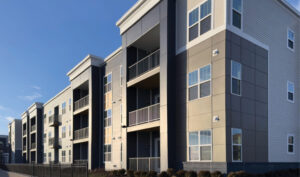
Viva Bene Senior Living Facility
The new Viva Bene community, a 195,000-square-foot active adult development in the St. Louis suburbs, selected Certified Knauf Performance+® EcoBatt insulation to meet the needs of residents 55 and older, and it was installed throughout the facility, reducing dust and VOCs while also delivering energy efficiency and soundproofing.
“Performance+® insulation shows how evidence-based and human-conscious design choices directly support healthier environments in senior living and healthcare settings.” — Knauf
-
Bedding
Seniors spend a significant portion of their day resting, making bedding one of the highest-exposure items.
Certified bedding, such as that from SIJO, plays a key role in improving indoor air quality. Bedding is in constant contact with the body and can trap dust mite allergens and other irritants that affect sleep and respiratory health.
Certified Asthma & Allergy Friendly® bedding is independently tested to ensure it reduces allergen accumulation, withstands regular cleaning, and contributes to a healthier sleep environment. Certified testing has shown that these products can reduce allergen levels in fabrics by more than 95% compared to unwashed controls, according to the Asthma & Allergy Friendly® Certification Standards.
“Sleep is a vulnerable time for people of all ages, but as we age and immune systems change or weaken, the products we use are increasingly more important. This is why creating the best possible products for sleep is paramount to SIJO, and why we sought out certification. We wanted to ensure that customers can sleep well knowing that our products block allergens.” — SIJO
-
Flooring
For seniors, flooring affects both safety and air quality. Materials can harbor dust and allergens and emit VOCs, all of which can impact respiratory health.
Certified flooring, such as Tarkett’s Powerbond® RS, undergoes rigorous testing to confirm low chemical emissions and ease of cleaning to remove allergens. This ensures that flooring not only supports better indoor air quality but also withstands the demands of healthcare and senior living environments. By combining durability with healthier performance, certified flooring helps reduce exposure risks while maintaining comfort, functionality, and peace of mind for residents and caregivers.
Tarkett brings an added dimension with its Human-Conscious Design™ approach, which helps create supportive spaces tailored to the unique needs of both residents and caregivers. From physical safety to emotional wellbeing, Tarkett emphasizes holistic, evidence-based design in senior living environments, where every interaction matters and this is reflected in their portfolio of Certified flooring.
In a recent industry interview, Sandra Soraci, Director of Healthcare and Senior Living Segment Strategy at Tarkett North America, highlighted the role of flooring in healthcare and senior living design:
“Powerbond hybrid carpet continues to be a leading solution, thanks to its closed-cell, impermeable cushion and chemically welded seams, which create a wall-to-wall moisture barrier. It remains one of the most trusted flooring technologies in the industry, and in 2022, Powerbond RS became the world’s first soft-surface flooring to be Certified Asthma & Allergy Friendly.” — Sandra Soraci, Tarkett North America
-
Air Cleaners
For seniors managing asthma, COPD, or other chronic conditions, continuous air cleaning can make a meaningful difference in comfort and wellbeing.
Certified air cleaners, such as those from Rabbit Air, provide proven solutions to reduce airborne contaminants and support healthier indoor environments. Rabbit Air purifiers are certified to meet strict standards for allergen removal and ozone emissions, complying with Code of Federal Regulations (CFR) section 21:801.415, an important consideration for sensitive populations.
Case Study Example: Crown Healthcare and Greene Acres Nursing Home
Senior living and healthcare facilities such as Crown Healthcare in New Jersey and Greene Acres Nursing Home in Arkansas have chosen Rabbit Air purifiers to support cleaner indoor environments. Their systems provided an added layer of reassurance for residents, patients, and staff, while their ultra-quiet operation and modern design helped promote a calm and comfortable atmosphere.
“In healthcare and senior living facilities, maintaining superior indoor air quality is a top priority for protecting vulnerable patients and residents. Our purifiers are proven to help reduce airborne contaminants and improve overall air quality, creating comfortable environments for everyone.” — Rabbit Air
-
Laundry Detergent
Laundry products are often overlooked in discussions about indoor air quality, yet they play an important role in the health of seniors and those with chronic conditions. Detergents that leave behind harsh chemical residues or strong fragrances can irritate sensitive airways, while allergens embedded in fabrics may worsen respiratory symptoms.
In senior living and healthcare settings, bedding and linens must be washed frequently to maintain hygiene and control allergens. This is especially important in resident bedrooms, where bedding is in direct contact with skin and the breathing zone. Using Certified detergents helps facilities ensure that frequent laundering practices don’t compromise indoor air quality or resident comfort.
Certified detergents, such as those from Renegade Brands, are independently tested to ensure they remove allergens, limit VOC emissions, exclude sensitizing chemicals, and leave no harmful residues on fabrics. Renegade’s relationship with the Asthma & Allergy Friendly® Certification Program began in 2021 with Sweat-X Sport Free and Clear, its first certified product, and later expanded into healthcare and senior care with the certification of Pure Pro Laundry Detergent.
Renegade Brands’ work in developing products that meet the unique needs of senior care, hospice, and healthcare settings was recognized with the Leadership in Senior Care Laundry Solutions Award earlier this year.
Through their participation in AAFA’s Health Equity Advancement and Leadership (HEAL) Program, Renegade has extended their impact beyond product innovation to the communities most affected by asthma and allergies. Their donation of certified detergents has already reached families in high-burden cities, and their work in senior care has touched over 10,000 residents across senior living facilities, a clear reflection of their commitment to access and equity in healthier environments.
Renegade’s certified detergents demonstrate how high-performance laundry care can support both consumer and healthcare environments, reinforcing the role of science-backed solutions in protecting sensitive populations.
The Role of Certification in Care Facilities
Terms like “hypoallergenic,” “eco,” or “green” are not consistently regulated, which makes independent certification especially valuable. The Asthma & Allergy Friendly® Certification Program subjects products to rigorous laboratory testing, ensuring that performance claims are backed by science and that certified products won’t introduce new pollutants into sensitive environments.
Certification also aligns with major building standards such as WELL and LEED, supporting ESG reporting and providing facilities with a clear competitive advantage. For families making difficult care choices, the Certification mark signals a trustworthy commitment to resident health.
Putting It Into Practice: Healthier Facilities, Healthier Aging
For facility managers and procurement teams, the path forward is clear:
• Look for the Certification mark when specifying products.
• Prioritize certified options in renovations, cleaning protocols, and room furnishings.
• Communicate these decisions transparently to residents and families, showing that the facility is committed to healthier environments.
Practical steps, backed by certification, can help enhance reputation, reduce risks, and contribute to improved resident comfort and wellbeing.
Conclusion: Healthy Aging Starts with Healthy Environments
Senior living facilities are home for vulnerable residents. Every product choice, from the paint on the walls to the sheets on the beds, contributes to the air they breathe and the comfort they feel.
Certified Asthma & Allergy Friendly® products provide science-backed assurance that these choices support healthier living. By embracing evidence-based and human-conscious design, senior living facilities can help residents age with dignity, comfort, and confidence.