How Choosing Third Party Certified Paints Can Improve Indoor Air Quality and Support Healthier Living Environments
October marks Indoor Air Quality Awareness Month, prompting us to reflect on the various factors that impact the air we breathe inside our homes. Paint can be a significant contributor to indoor air quality (IAQ): paint can release potentially harmful chemicals into the air during and after application, which can significantly affect health, particularly for those with asthma, allergies, or chemical sensitivities. Choosing the right paint can help minimize these risks.
This article explores how paint impacts IAQ, the importance of third-party certification, and why Certified Asthma & Allergy Friendly® paints are an excellent choice for healthier indoor environments.
Paint and Indoor Air Quality
The primary way paint impacts indoor air quality is through the emission of chemicals, particularly volatile organic compounds (VOCs). VOCs are chemicals that evaporate into the air as paint dries. While some VOCs are relatively harmless, others can cause significant health issues, especially for those with asthma or allergies or any respiratory illness. According to the U.S. Environmental Protection Agency, exposure to VOCs can cause “eye, nose, and throat irritation; headaches, dizziness, and nausea,” and in extreme cases, long-term damage to the liver, kidneys, or central nervous system. It is advised that people with sensitivities to certain chemicals and those impacted by asthma and allergies limit exposure to VOCs as much as possible. However, considering their potential harmful effects, everyone should limit exposure to these chemicals.
VOCs are particularly concerning because they continue to off-gas even after the paint dries. This means that while the smell of fresh paint may dissipate after a few days, harmful chemicals may still linger in the air. For individuals with sensitive airways, such as those with asthma, these chemicals can exacerbate symptoms or trigger asthma attacks.
In response to growing consumer awareness, many paint manufacturers have developed low-VOC options. These paints, predominantly water-based, significantly reduce the amount of harmful emissions, making them a better choice for improving IAQ.
The Importance of Third-Party Certification
While many paint products claim to be ‘low-VOC’ or ‘non-toxic,’ not all of them meet the stringent criteria necessary to ensure compliance with ingredient standards that support better indoor air quality and product performance. This is where third-party certification becomes essential. Third-party certification programs, such as the Asthma & Allergy Friendly® Certification Program, test products against independent standards to confirm manufacturers’ claims. Manufacturers can voluntarily submit their paints for independent testing, and if the product meets the standards, it can be awarded certification.
For consumers, third-party certification provides peace of mind that the product they are using has been rigorously tested. Third-party certification is crucial because in some cases, full disclosure of ingredients may not be available due to proprietary formulations. This lack of transparency makes it difficult for consumers to avoid harmful chemicals on their own. A trusted certification label helps bridge that gap, guiding consumers toward wiser choices for better indoor air quality.
The Asthma & Allergy Friendly® Certification Program for Paint
The Asthma & Allergy Friendly® Certification Program takes a balanced approach when certifying paints, considering both their chemical composition and performance. It’s not possible to make paint without using chemicals, and some chemicals may have negative effects but are necessary for the product to function effectively.
The program identifies paints that do not contain unnecessarily harmful ingredients and ensures that any necessary chemicals that could cause allergic reactions are present at levels low enough to minimize concern. This thorough review makes Certified paints a better option for all consumers, particularly those with asthma or allergies.
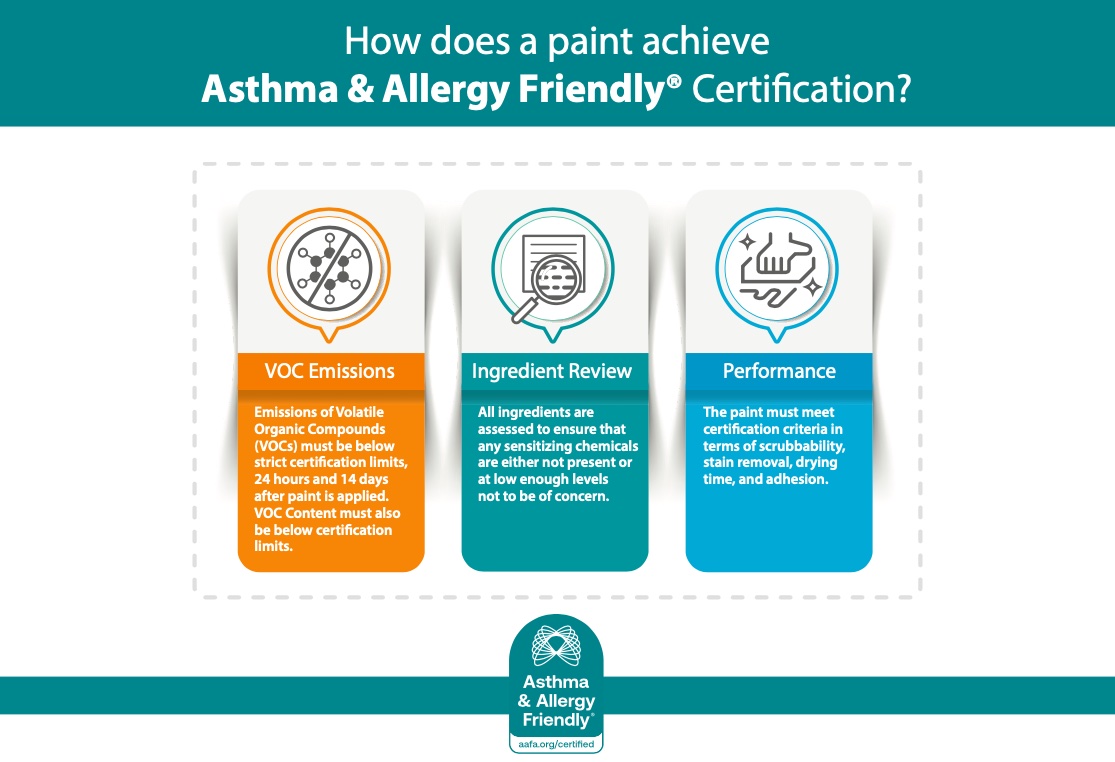
Certified paints are tested for VOC emissions, ingredient safety, and performance to ensure they support healthier indoor air quality.
Certified paints are subject to testing beyond standard VOC emission tests. The Asthma & Allergy Friendly® Certification Program measures VOC emissions at 24 hours and 14 days after application, ensuring that VOC levels remain low from the outset. Though the majority of VOC off-gassing typically happens during the first week after painting, surfaces can continue to emit VOCs at varying levels, which may be of concern particularly for sensitive individuals.
Many standard certifications only test after a 10-day conditioning period, which may not reflect real-world usage, where immediate air quality is a concern for consumers painting their own homes, schools, hospitals or care facilities. Furthermore, in settings such as healthcare and commercial spaces, frequent repainting is often necessary, making odor and return-to-service time key factors. Low VOC levels at 24 hours means less downtime for hospitals, schools, and businesses, supporting a healthier indoor environment without prolonged closures.
The Broader Impact of Paint Certification
Asthma & Allergy Friendly® Certified paints meet LEED criteria for low-emitting materials and comply with WELL Feature X06 Part 1b4.
The Asthma & Allergy Friendly® Certification Program works with major paint manufacturers to certify their products. These companies recognize the importance of reducing their environmental footprint while also improving IAQ for their consumers. By achieving certification, they demonstrate a commitment to corporate responsibility and consumer well-being. With their focus on the planet, sustainability, and people, they are paving the way for all paint manufacturers.
As more consumers become aware of the negative environmental and health impacts of conventional paints, the demand for superior products grows. Certified paints play a vital role in the healthier buildings movement. Studies show that indoor air can be two to five times more polluted than outdoor air, and with people spending up to 90% of their time indoors, it is clear that we need to reduce exposure to potentially harmful chemicals. Certified paints contribute to creating healthier homes, schools, and workplaces.
Notably, Certified Asthma & Allergy Friendly® paints align with the US. Green Building Council’s (USGBC) LEED program and are eligible for credits for low-emitting materials. Additionally, these Certified products are compliant with WELL Feature X06 Part 1b4 of the WELL Building Standard. This helps companies meet sustainability goals while improving IAQ.
Conclusion
During Indoor Air Quality Awareness Month, we’re reminded that creating healthier indoor spaces starts with informed choices, right down to the paint we use. While it’s easy to overlook, paint can have a lasting influence on indoor air quality through the release of volatile organic compounds (VOCs) and other chemical emissions.
The Asthma & Allergy Friendly® Certification Program provides a clear, science-based way to identify paints that meet strict standards for low emissions and ingredients. Certified paints not only support healthier indoor air but also align with green building frameworks such as LEED and the WELL Building Standard, reinforcing the connection between product performance, sustainability, and human wellbeing.
As awareness of indoor air quality continues to grow, choosing independently certified products helps transform awareness into action. This October, and every month, our everyday decisions, from the materials we select to the standards we uphold, play a fundamental role in shaping environments that truly support better living spaces.