Each year, the Asthma and Allergy Foundation of America (AAFA) releases its Allergy Capitals report, ranking the 100 most populated metropolitan areas in the contiguous United States based on how challenging they are for people living with pollen allergies.
The 2026 Allergy Capitals report highlights how environmental factors and weather patterns are contributing to longer and more intense pollen seasons. Warmer temperatures linked to climate change are allowing plants to start growing earlier and produce more highly allergenic pollen, while extreme weather events can further increase pollen production or prolong pollen seasons.
For the more than 106 million people in the United States who live with allergies and/or asthma, these trends can significantly affect quality of life.
AAFA’s annual report provides data and resources to help people recognize, prevent, and manage seasonal allergies.
The Most Challenging Places to Live With Pollen Allergies
In the 2026 Allergy Capitals ranking, Boise, Idaho, holds the top position as the most challenging place to live with pollen allergies.
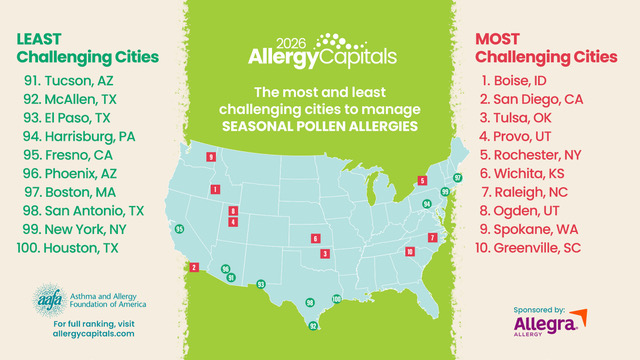
AAFA’s 2026 Allergy Capitals report identifies the most and least challenging U.S. cities for managing seasonal pollen allergies.
AAFA’s rankings are based on three main factors:
- Tree, grass, and weed pollen scores
- Over-the-counter allergy medication use
- Availability of board-certified allergists and immunologists
These combined factors help identify locations where seasonal allergies may be particularly challenging for residents.
Why Allergy Seasons Are Getting Worse
AAFA’s report highlights the growing influence of environmental conditions on pollen production. Climate change is contributing to longer and more intense pollen seasons, with warmer temperatures causing plants to begin producing pollen earlier in the year and continue later into the fall.
The report also notes that severe weather events in recent years, including atmospheric river storms, warmer temperatures, and drought conditions, likely contributed to spikes in pollen levels in several Western U.S. cities.
When these conditions combine, plants may produce more pollen, pollen seasons may last longer, and pollen may remain airborne for extended periods of time.
Understanding Pollen and Seasonal Allergies
Pollen is one of the most common triggers of seasonal allergies. The three main types responsible for allergic reactions are:
- Tree pollen
- Grass pollen
- Weed pollen
Exposure to pollen can trigger symptoms such as sneezing, congestion, itchy or watery eyes, and coughing. In some individuals, pollen exposure can also worsen conditions such as allergic asthma.
Seasonal allergies can also affect overall well-being and daily life. The report notes that pollen allergies may contribute to fatigue, sleep disturbances, decreased productivity, and impacts on school or work performance.
Managing Pollen Allergies Wherever You Live
While pollen levels vary by location, allergies affect people everywhere. AAFA emphasizes that managing exposure and following a treatment plan can help control symptoms, no matter where you live.
AAFA recommends several steps to help reduce exposure during pollen season:
- Check pollen counts regularly
- Remove shoes and change clothes after spending time outdoors
- Shower before bed to remove pollen from hair and skin
- Keep windows closed during high pollen periods
- Use air conditioning or air cleaners with appropriate filtration
Working with an allergist and developing an allergy treatment plan can also help individuals better manage seasonal allergy symptoms.
Supporting a Healthier Indoor Environment
Although outdoor pollen levels cannot be controlled, the indoor environment can play an important role in reducing exposure to allergens.
The Asthma & Allergy Friendly® Certification Program helps consumers identify products that have been scientifically tested to reduce exposure to allergens and asthma triggers in the home. Products that earn the Asthma & Allergy Friendly® mark are tested against strict standards to verify that they perform as claimed and support better indoor environments for people living with asthma and allergies.
As pollen seasons become longer and more intense, informed choices about the home environment can help people with allergies take practical steps to manage their symptoms.