Science-backed strategies and Certified products can transform classroom air into a healthier learning environment
Children spend up to 1,000 hours in school each year. During that time, the air they breathe can have a profound impact on their health, cognitive performance, and academic outcomes. Research shows that:
- Children breathe 50% more air per pound of body weight than adults, making them more vulnerable to indoor pollutants.
- Children exposed to poor indoor air quality have a higher risk of respiratory issues.
- Improved IAQ can increase cognitive performance by up to 61%.
These are not just health statistics, they are educational performance metrics, too.
The Air They Breathe: What’s in It?
When indoor air quality is compromised, students may be exposed to a variety of pollutants:
- Dust and Mold: Dust harbors allergens like dust mite debris. Mold, common in older or poorly maintained buildings, can trigger or worsen respiratory symptoms.
- Volatile Organic Compounds (VOCs): Emitted by paints, adhesives, flooring, cleaning products, and furnishings, VOCs can contribute to poor IAQ and long-term health issues.
- Bacteria and Viruses: Crowded classrooms with poor ventilation can allow pathogens to spread quickly, increasing absenteeism.
- Excess CO₂: Elevated carbon dioxide levels due to poor ventilation can lead to drowsiness, headaches, and reduced attention spans.
- Outdoor Pollution: Traffic-related emissions from idling buses or cars can infiltrate classrooms, especially in urban schools.
The Impact on Health and Learning
Poor IAQ affects both physical health and academic success. Exposure to pollutants and allergens can:
- Aggravate asthma and allergies
- Cause headaches, sinus issues, or fatigue
- Impair concentration and learning
- Increase absenteeism and decrease test scores
Poor IAQ also affects teachers and staff, reducing comfort and increasing turnover. A healthy indoor environment supports the entire school community.
Improving Indoor Air Quality in Schools
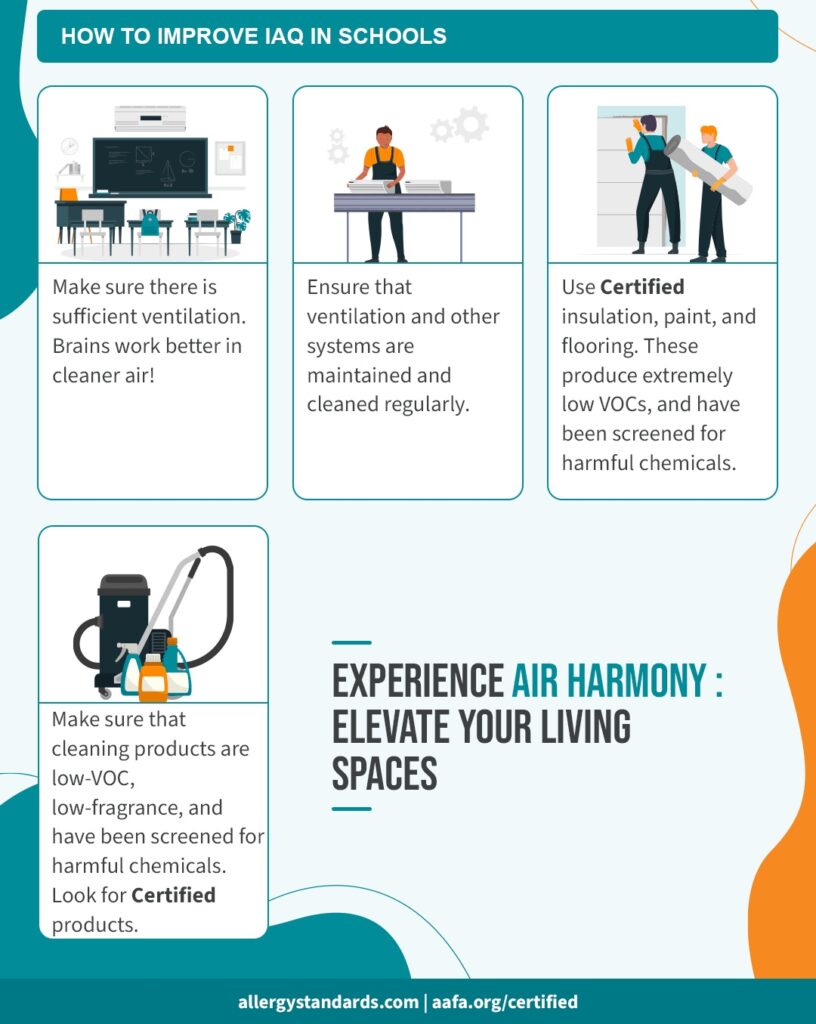
Clean indoor air helps students and teachers breathe easier, focus better, and perform their best.
Improving IAQ doesn’t require massive overhauls. Small, evidence-based changes can make a big difference. Here are some strategies:
- Increase Ventilation
- Open windows when outdoor air quality is good, maintain exhaust systems, and ensure HVAC systems operate efficiently.
- Choose Low-VOC Materials
- Renovations and new furnishings should prioritize low-emitting materials. Certified Asthma & Allergy Friendly® flooring, insulation, and paints are tested to emit fewer harmful chemicals.
- Maintain HVAC Systems
- Replace filters regularly using trusted solutions like those Certified Asthma & Allergy Friendly®.
- Control Humidity
- Maintain humidity between 40–50% to deter mold growth. Promptly repair leaks and any water damage.
- Upgrade Flooring
- Choose flooring that is easy to clean and low-emitting. Certified flooring ensures easier allergen removal without increasing airborne levels during and after cleaning.
- Use Certified Air Purifiers
- Air purifiers that have been tested to reduce airborne allergens effectively are an excellent addition to classroom environments.
- Choose Certified Cleaning Products
- Daily cleaning should support health, not harm it. Products that are Certified Asthma & Allergy Friendly®have been tested to remove allergens and emit minimal VOCs.
- Ban Vehicle Idling
- Implement no-idling zones around school grounds to limit pollution from buses and cars.
Why Certification Matters
Terms like “hypoallergenic” are unregulated marketing terms. The Asthma & Allergy Friendly® Certification Program, developed with the Asthma and Allergy Foundation of America (AAFA), offers independent, science-based validation that products meet stringent health-based criteria.
Certified products aren’t just good for students with asthma and allergies, they support better air quality for everyone in the school building.
Conclusion: Healthy Schools Start with Healthy Air
According to the EPA, half of U.S. schools have issues with indoor air quality. With so much at stake -health, attendance, and academic success- improving school air is not optional, it’s essential.
As this year’s Indoor Air Quality Awareness Month draws to a close, take action. Whether you’re a school administrator, teacher, parent, or policymaker, consider how Certified Asthma & Allergy Friendly® products and smart building practices can help our students thrive.