Certified products can support indoor air quality in the workplace, enhancing employee well-being, reducing absenteeism, and boosting productivity
When we think about staying healthy at work, we often focus on ergonomics, balanced meals, or regular breaks. But there’s another factor we sometimes overlook: the quality of the air we breathe. With so much of our day spent in offices or indoor workplaces, the air circulating through those spaces plays a key role in both our physical health and cognitive performance.
In this article, we explore the relationship between IAQ and workplace wellness, the factors that affect it, and how Certified Asthma & Allergy Friendly® products can help improve it.
Why Indoor Air Quality in the Workplace Impacts Our Health
Indoor Air Quality (IAQ) refers to the quality of air within and around buildings, especially in relation to occupant health and comfort. While outdoor pollution often steals the headlines, indoor air can be two to five times more polluted than outside air. Considering that we spend up to 90% of our time indoors, much of it at work, IAQ has a profound effect on well-being.
Poor IAQ has been linked to a variety of health issues, from mild symptoms like fatigue and headaches to more severe outcomes such as respiratory infections, allergy flare-ups, and asthma attacks. For people with asthma and allergies, the stakes are even higher. In fact:
- There are 102.1 million people in the U.S. with allergies (seasonal allergy, eczema, and/or food allergy), including 82.1 million adults and 20 million children. Many of them spend their days in schools, offices, and workplaces where poor air quality can worsen symptoms.
- There are over 28 million people in the U.S. with asthma, including over 23 million adults and 4.9 million
“Sick Building Syndrome” (SBS), a term coined in the 1970s, described the health problems caused by inadequate ventilation and pollutant buildup in tightly sealed office buildings. Though the term is less commonly used today, the underlying issues remain, manifesting in symptoms such as eye irritation, dizziness, and respiratory distress, which often resolve once a person leaves the affected building.
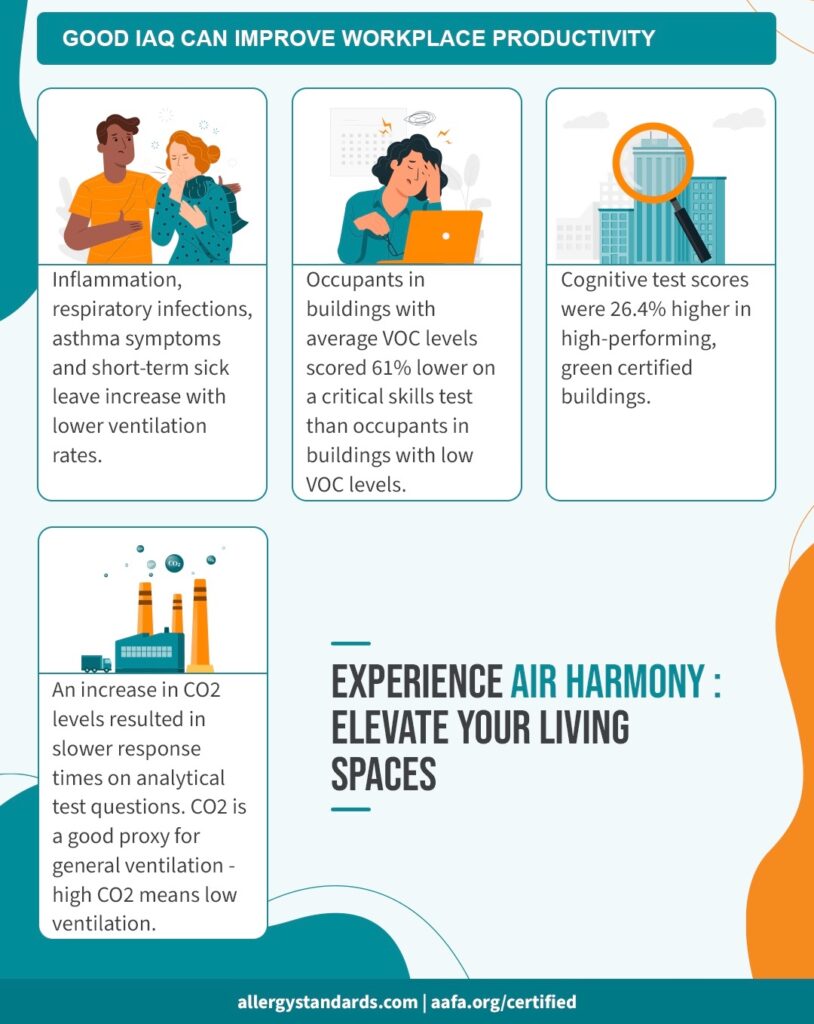
The consequences of poor IAQ go beyond physical health. In a Harvard study led by Joseph G. Allen, improving indoor air quality, especially lowering VOCs and ensuring ventilation, was shown to raise cognitive performance by up to 61% in office settings.
Evidence-Based Design and Indoor Air Quality
Evidence-based design, originating in healthcare, is increasingly applied to commercial and office spaces. It emphasizes decision-making based on scientific evidence to create environments that support human health and performance.
In the context of IAQ, evidence-based design supports the use of low-emitting materials, optimized ventilation strategies, and independently certified products to reduce pollutants and enhance occupant well-being. By integrating research-backed solutions, employers and designers can make smarter decisions about the materials and systems that define workplace environments.
Key Workplace Factors That Impact IAQ
Several elements can influence the indoor air quality in the workplace:
Poor Ventilation
Insufficient ventilation allows pollutants like CO₂, VOCs, and particulate matter to accumulate. This can degrade air quality and impair cognitive function.
HVAC Systems and Filters
HVAC systems that are poorly maintained or equipped with inadequate filters can recirculate dust, allergens, and mold spores. Air filters that do not meet standards, or are not regularly changed, fail to effectively capture airborne contaminants.
VOCs from Materials
Paints, adhesives, flooring, insulation, and cleaning products can emit VOCs, impacting respiratory health and cognitive performance. Consistent exposure to elevated VOC levels can lead to both acute and chronic health concerns.
Flooring and Insulation
These materials can trap dust, moisture, and allergens, and some may release VOCs over time. Inadequate cleaning or moisture buildup can also lead to mold growth, a serious concern for respiratory health.
Cleaning Products
Conventional cleaners often contain harsh chemicals that aggravate asthma and allergies. Switching to low-emission, scientifically tested alternatives is a big step toward healthier indoor air.
How the Asthma & Allergy Friendly® Certification Program Helps
The Asthma & Allergy Friendly® Certification Program, developed by Allergy Standards Ltd in partnership with the Asthma and Allergy Foundation of America (AAFA), identifies products that support healthier indoor air by undergoing rigorous scientific testing.
Products are tested to ensure they:
- Emit low levels of VOCs and other pollutants
- Reduce or trap allergens effectively
- Maintain performance over time and under real-life conditions
This holistic approach evaluates not only emissions but also allergen control, cleanability, and product longevity, all critical factors for maintaining healthier indoor environments.
Why Certified Products Make a Difference
Healthier Environments
Certified products reduce exposure to allergens and irritants, making workplaces more inclusive for employees with asthma, allergies, or chemical sensitivities.
Increased Productivity
Cleaner air has been linked to improved decision-making, reduced absenteeism, and higher cognitive function, benefits that translate into real-world performance.
ESG and Sustainability Alignment
Certified products contribute to LEED credits and WELL Building Standard compliance. This helps companies demonstrate commitment to health, sustainability, and measurable ESG outcomes.
Conclusion
Indoor air quality isn’t just a comfort factor, it’s a strategic priority for any business that values employee health and performance.
Choosing Asthma & Allergy Friendly® Certified products means making science-backed decisions that improve IAQ, reduce risk, and support your workforce. It’s a commitment to healthier buildings, and healthier people.