Improve indoor air quality by adopting simple practices like regular cleaning, proper ventilation, and choosing Certified Asthma & Allergy Friendly® products
Indoor Air Quality Awareness Month is the perfect time to take a closer look at the air we breathe inside our homes. According to the U.S. Environmental Protection Agency, indoor air can be up to five times more polluted than outdoor air, a surprising fact considering how much time we spend indoors. Everyday activities like cleaning, cooking, or even using certain household products can release allergens and volatile organic compounds (VOCs) that linger in the air. Over time, this buildup can affect respiratory health and overall wellbeing.
The good news is that improving indoor air quality doesn’t require complex systems or costly renovations. Simple, science-backed actions — like regular cleaning, proper ventilation, managing humidity, and choosing Certified Asthma & Allergy Friendly® products — can make a big difference. By making informed choices and small habit changes, you can help create a cleaner, more comfortable home environment for everyone.
Regular Cleaning: A Key to Better IAQ
Regular cleaning is essential for controlling allergens like dust, pet dander, and pollen that accumulate on surfaces and flooring. To improve IAQ, you need to remove these allergens without spreading them back into the air.
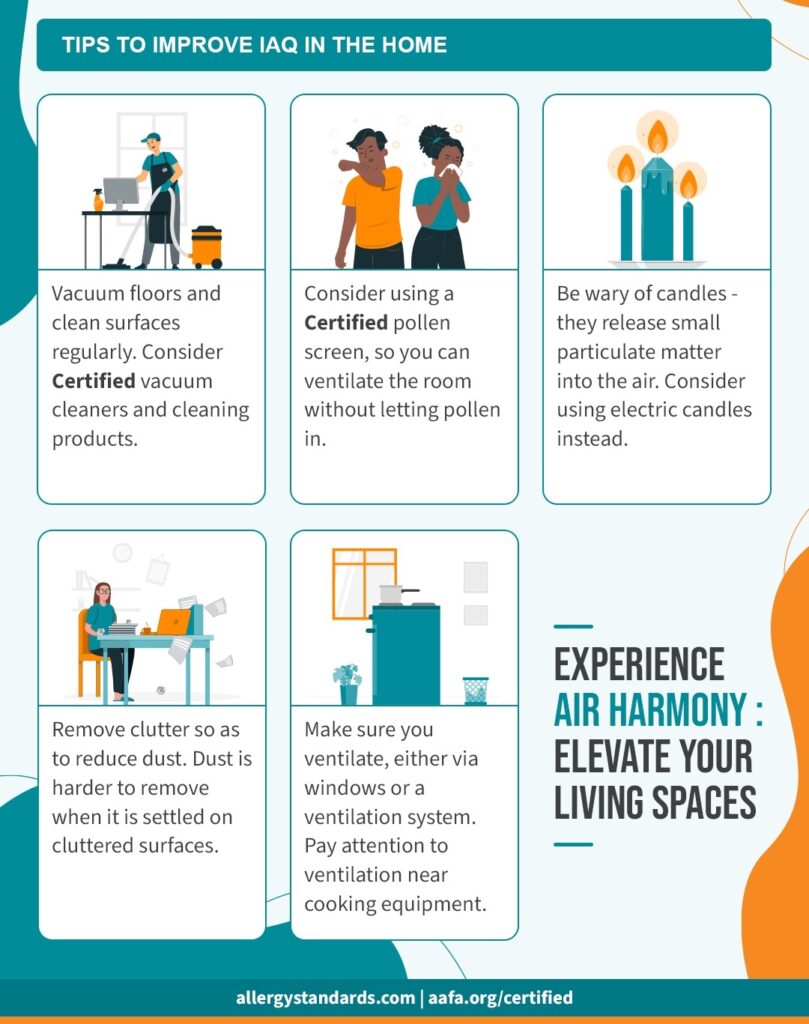
- Vacuuming: Vacuuming is one of the most effective ways to remove dust and allergens. Opting for a Certified Asthma & Allergy Friendly® vacuum ensures it features a high-performance filtration system that traps dust and allergens, preventing them from being released back into the air. These vacuums maintain strong suction power and prevent the reintroduction of particles into the room.
- Dusting: Dusting is another crucial cleaning step. Use a moist cloth instead of a dry one to avoid sending dust particles into the air. Decluttering your home also makes dusting easier and more effective.
- Choosing Certified Cleaning Products: The cleaning products you use are equally important. Many conventional cleaners release volatile organic compounds (VOCs), which can irritate your eyes, nose, and throat. Certified Asthma & Allergy Friendly® cleaning products are rigorously tested to ensure they meet low-VOC emission standards, making them a better option for people with asthma and allergies. They also reduce allergens without redistributing them into the air.
Ventilation: Fresh Air for a Healthier Home
Proper ventilation is one of the best ways to improve IAQ. It helps lower the concentration of indoor pollutants by allowing fresh outdoor air to circulate inside.
Tips for Better Ventilation
- Regularly opening windows during cooking or cleaning helps reduce stagnant indoor air. With cooler temperatures leading to closed windows and less ventilation, October is the ideal time to refresh your home’s air and prevent the buildup of allergens and pollutants before winter begins.
- However, if you or someone in your home has pollen allergies, opening windows might not be ideal. Consider installing pollen screens, which are designed to block pollen while allowing fresh air to flow into your home. These screens are tested to ensure they do not compromise air circulation while still keeping allergens at bay.
- Air purifiers can be an excellent tool in reducing indoor allergens and pollutants, significantly improving indoor air quality. The effectiveness of an air purifier depends on its ability to remove airborne allergens such as dust mites, pet dander, pollen, and mold spores. The Asthma & Allergy Friendly® Certification Program evaluates air purifiers by testing their ability to reduce allergen levels by at least 90%. This process includes simulations of real-world conditions to ensure performance in typical home environments. In addition to allergen removal, these devices are tested to ensure that they do not redistribute allergens back into the air or produce harmful levels of ozone. Ozone can irritate the respiratory system, therefore Certified air purifiers must emit ozone at levels below 0.05 ppm.
Preventing Mold and Managing Humidity
Mold thrives in damp environments and is a common indoor air pollutant. For those with asthma and allergies, mold spores can worsen symptoms and trigger asthma attacks. Managing humidity is key to preventing mold growth.
- Humidity Control: Keep humidity levels in your home between 40% and 50% to help prevent mold and dust mites. In areas with higher moisture levels, like kitchens and bathrooms, ensure that exhaust fans are working well, and consider using a dehumidifier if necessary.
- Mold Prevention and Cleaning: Act quickly to address mold growth by removing mold-damaged materials and cleaning affected surfaces. Wear protective gear such as gloves and a mask when cleaning mold to avoid exposure to spores.
Other Ways to Improve IAQ
There are additional steps you can take to create a healthier home:
- Avoid Candles: Burning candles can release small particles into the air, contributing to indoor air pollution. If you enjoy the ambiance of candles, consider using electric candles instead.
- Be Mindful of Cooking Appliances: Gas stoves release nitrogen dioxide and carbon monoxide, which can affect IAQ. Use your kitchen’s exhaust fan or open windows while cooking to improve ventilation.
- Limit Chemical Exposure: Many household products contain chemicals that can negatively affect IAQ. Always follow manufacturer instructions, and avoid mixing cleaning products, as this can lead to harmful chemical reactions.
- Choose Certified HVAC filters: Certified HVAC filters play a crucial role in improving indoor air quality by effectively trapping airborne particles like dust, pet dander, and pollen. These particles can circulate throughout the home if not captured by the HVAC system’s filter, exacerbating asthma & allergy symptoms. Remember, to follow the manufacturer’s recommendations for replacing your HVAC filters regularly.
- Regularly wash bedding: Use this Healthy Homes Month to develop a habit of regularly washing your bedding in hot water (130°F/55°C) to remove dust mite allergens. Choose Certified bedding that has been rigorously tested for durability and for the presence of potentially harmful chemicals commonly used in textile production.
The Value of Third-Party Certification
With so many products on the market claiming to improve indoor air quality, it can be hard to know which ones to trust. The Asthma & Allergy Friendly® Certification Program is a collaborative initiative between the Asthma and Allergy Foundation of America and Allergy Standards Ltd, dedicated to helping consumers identify products that contribute to a healthier indoor environment.
The Asthma & Allergy Friendly® Certification Program offers independent verification that products meet high standards for allergen reduction, low chemical emissions, and overall performance. By choosing Certified products, you can trust that they have been rigorously tested to help create a healthier home environment.
The program includes a wide range of Certified products, from vacuum cleaners and air purifiers to paint and cleaning products. These products have been scientifically validated to support a healthier indoor environment making them suitable for everyone, especially those with asthma and allergies.
Conclusion
Indoor Air Quality Awareness Month is a reminder that the air inside our homes deserves just as much attention as the surfaces we clean or the water we drink. You don’t need to overhaul your entire home to make an impact, as even small, consistent steps matter.
Start by ensuring good ventilation, managing moisture, and incorporating independently tested, Certified Asthma & Allergy Friendly® products into your routine. These evidence-based actions help reduce allergens, limit chemical exposure, and improve overall air quality.
When we prioritize clean air indoors, we’re not only supporting those with asthma and allergies, we’re creating healthier spaces for everyone who lives, works, and plays there.