Discover how bedding materials, allergens, and chemical treatments can influence the air quality in your home
Indoor air quality (IAQ) has a direct impact on our health and comfort, particularly for individuals with asthma or allergies. Indoor air pollution ranks among the top five environmental risks to public health, according to the U.S. Environmental Protection Agency, making it essential to understand how everyday products contribute to what we breathe indoors.
While many people think of air purifiers or ventilation systems when it comes to improving IAQ, everyday items like bedding play a surprisingly significant role. Bedding can harbor allergens such as dust mite allergen, pet dander, and mold spores, and may also release chemical emissions from treated fabrics.
This article will explore how bedding impacts IAQ and highlight the importance of scientifically tested and certified products.
How Bedding Affects Indoor Air Quality
Bedding is a major contributor to the air quality in your bedroom. Dust mites, which thrive in the warm, humid environment of bedding, are a significant concern. These tiny creatures, invisible to the naked eye, feed on dead skin cells, making pillows, mattresses, and duvets ideal breeding grounds. The problem lies not just in the mites themselves but in their body parts and waste, which can trigger asthma and allergic reactions. There is a strong association between sensitization to allergens derived from dust mites and conditions including asthma, perennial rhinitis, and atopic dermatitis.
Additionally, chemicals used in the production of bedding can negatively impact IAQ. Many textiles undergo treatments for wrinkle resistance, flame retardancy, and colorfastness, introducing potential irritants into your indoor environment. Formaldehyde, a common chemical used in bedding, is known to irritate the respiratory system and skin, potentially exacerbating asthma symptoms. Azo dyes, which create vibrant colors, can also break down into harmful substances over time.
Given these risks, it’s essential to choose bedding products that reduce exposure to dust mites and chemicals. We spend about one-third of our lives in our bedrooms, and many individuals, including children, the elderly and people with illness may spend a good deal more than this.
Effective Bedding and Strategies for Better Indoor Air Quality
One of the most effective ways to improve indoor air quality in your bedroom is by using scientifically validated dust mite-proof encasings for pillows, duvets, and mattresses. These encasings are designed to block dust mites and their allergens from passing through, reducing exposure to these triggers. For maximum effectiveness, it’s important to choose encasings made from tightly woven fabrics with appropriate thread count and pore size to prevent allergens from escaping, while still allowing breathability for comfort during sleep.
Another strategy is to regularly wash your bedding in hot water (130°F/55°C) to help control dust mite allergens, as well as pet dander and other potential triggers. In addition, selecting high-quality, breathable bedding products that can withstand frequent hot washing and do not contain known irritants is crucial for cultivating a healthier sleep environment.
Remember, laundry detergents also play a role in indoor air quality, so choose a certified or verified detergent. The Asthma & Allergy Friendly® Certification Program subjects laundry detergents to biological, physical, and chemical testing to ensure they are effective in reducing allergens without contributing to poor IAQ.
The Importance of Third-Party Certification
Choosing bedding that is independently tested and verified by third-party organizations is essential to ensure it meets the highest standards for allergy management and indoor air quality. Our Asthma & Allergy Friendly® Certification Program is one such certification that provides consumers with the assurance that bedding products have undergone rigorous testing to meet strict scientific criteria.
Developed by Allergy Standards Limited in collaboration with the Asthma and Allergy Foundation of America (AAFA), the Asthma & Allergy Friendly® Certification Program helps consumers identify bedding products that are suitable for people with asthma and allergies. Unlike unregulated terms such as “hypoallergenic,” which can be used without standardized testing, the Asthma & Allergy Friendly® Certification is based on comprehensive, accredited laboratory testing.
How the Certification Program Tests and Certifies Bedding
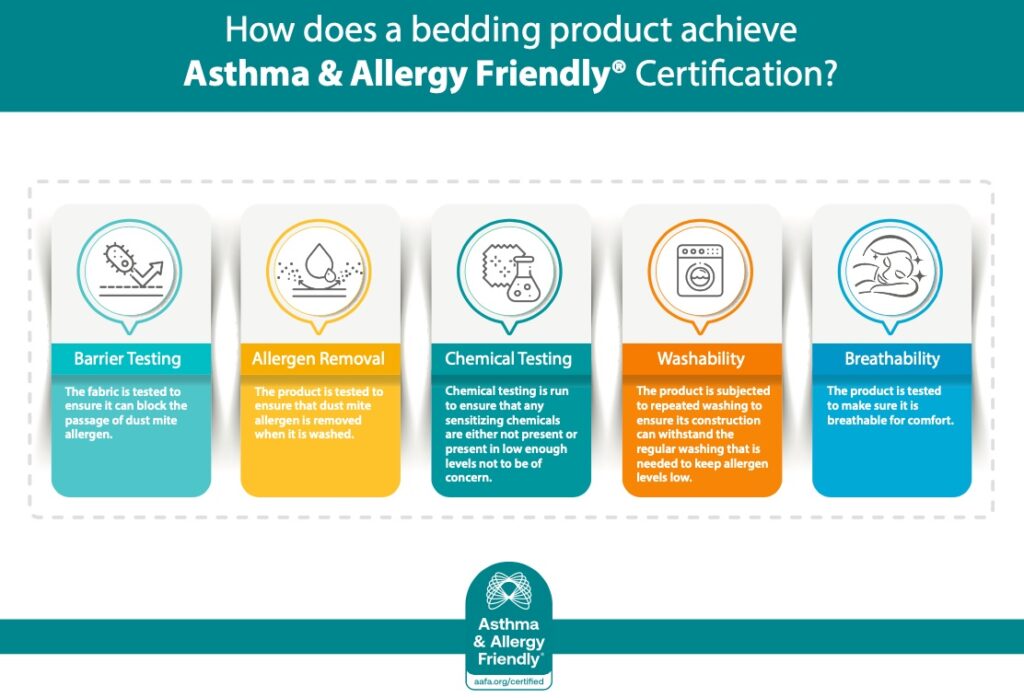
The certification process for bedding under the Asthma & Allergy Friendly® Certification Program involves several key tests to ensure the product is effective in reducing allergen exposure and that it contains no harmful chemicals that could potentially cause allergic reactions. These tests include:
- Barrier Testing: Ensures the cover fabric prevents dust mites and allergens from passing through, including testing of seams and zippers for potential weak points.
- Allergen Removal: Bedding is seeded with allergens in a controlled environment and then washed to confirm that washing effectively reduces allergen content.
- Repeated Washing: Bedding is subjected to multiple washing cycles to ensure it retains its physical integrity and allergen-reducing properties.
- Chemical Testing: Fabric and fill materials are tested for residual chemicals such as azo dyes, pesticides, volatile organic compounds (VOCs), and irritant chemicals.
- Breathability: The bedding is tested for breathability, ensuring comfort while acting as an allergen barrier.
Conclusion
Bedding is one of the most intimate and frequently used components of the home environment, yet it can be a hidden source of allergens and chemical exposure. Choosing Certified bedding is a simple but impactful step toward improving indoor air quality and supporting better respiratory health. Through independent, science-based testing, the Asthma & Allergy Friendly® Certification Program helps ensure that products not only meet performance expectations but also contribute to a healthier sleep environment. For the millions of people affected by asthma and allergies, these informed choices can translate into significant improvements in daily comfort and long-term well-being.