Independently tested and Certified washing machines are proven to effectively reduce allergens from fabrics and support better indoor air quality
When we think about managing allergens in the home, we often focus on vacuuming or using air purifiers. Yet one of the most effective tools for reducing allergens and supporting better indoor air quality (IAQ) is something we already use regularly – the washing machine.
Washing machines do more than keep clothes clean; they play an important role in an allergen reduction strategy. From bedding and clothes to stuffed toys, many household fabrics can trap allergens, and the right washing machine can help significantly reduce them, benefiting everyone in the household.
With more than 100 million Americans affected by asthma and allergies, reducing exposure to allergens indoors is essential for maintaining health and comfort. Common triggers such as dust mite allergen, pollen, and mold can worsen symptoms and degrade indoor air quality. These allergens often build up on soft surfaces and fabrics, where they’re difficult to remove through regular cleaning. Compounding the issue, pollen seasons now produce 21% more pollen than in 1990, especially from trees, making allergen management even more important.
This article explores how washing machines contribute to reducing asthma and allergy triggers and how choosing a third-party validated washing machine, such as one certified by the Asthma & Allergy Friendly® Certification Program, can improve your home’s air quality for everyone in the home.
How a Washing Machine Helps Reduce Allergens
Allergens like dust mite allergen, pet dander, and pollen can accumulate on various household items, including clothing, bedding, and stuffed toys. Dust mites, in particular, are a major contributor to allergic reactions. These tiny insects thrive in warm, humid environments like beds and pillows, where they feed on dead skin cells. It is the insects’ waste that causes the allergic reaction, not the mites themselves. Washing these items regularly is one of the most effective ways to reduce dust mite allergen and other irritants.
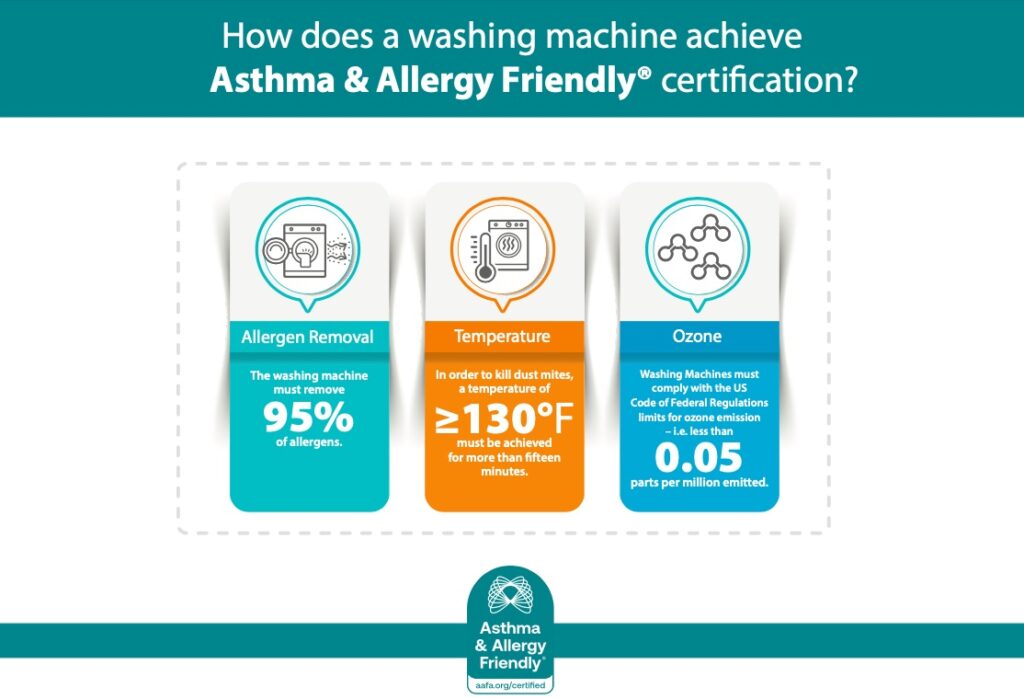
However, not all washing machines are created equal when it comes to allergen removal. To effectively reduce dust mite allergen, a washing machine needs to reach and maintain a temperature of at least 130°F (54.4°C) throughout the entire drum. This temperature is necessary to kill dust mites and ensure that allergens are removed from your fabrics. Not all washing machines can consistently achieve and maintain this high temperature, which is crucial for effective allergen control.
The Importance of Certified Asthma & Allergy Friendly® Washing Machines
Practical Tips for Allergen Control with Your Washing Machine
To maximize the allergen-reducing benefits of your washing machine, here are some helpful tips:
Wash Bedding: Regularly wash pillowcases, sheets, and duvet covers on a warm cycle to help reduce dust mite allergen and pet allergens. Use a low tumble dry setting.
Wash Stuffed Toys: Dust mites can collect on children’s stuffed toys. Wash them before use and regularly thereafter (preferably every 4 weeks). If they can’t be washed, place them in a sealed plastic bag and freeze them for 24 hours before tumble-drying.
Ventilate the Laundry Room: Keep humidity levels below 50% to prevent the growth of dust mites. Make sure your dryer is properly vented and clean the lint trap after every use.
Leave the Washing Machine Door Open: After use, leave the washing machine door open to allow it to dry out and prevent mold growth.
Laundry detergents: Laundry detergents also play a role in indoor air quality, so choose a certified or verified detergent. The Asthma & Allergy Friendly® Certification Program subjects laundry detergents to biological, physical, and chemical testing to ensure they are effective in reducing allergens without contributing to poor IAQ. (More about this in our laundry detergent article…)
Why Certification Matters
Not all washing machines are equally effective at reducing allergens, and marketing terms like “hypoallergenic” are not regulated, meaning they may not be backed by scientific testing. The Asthma & Allergy Friendly® Certification Program offers independent, scientifically-backed validation that a product meets strict standards. By choosing a Certified washing machine, you can be confident that it has undergone rigorous testing to ensure it contributes to a healthier home environment.
Conclusion
Washing machines play a crucial role in reducing allergens and improving indoor air quality. For those with asthma and allergies, choosing the right washing machine can make a significant difference, but this benefit extends to everyone in the household.
This Indoor Air Quality (IAQ) Awareness Month, take the opportunity to evaluate your home’s laundry routine and consider how a Certified Asthma & Allergy Friendly® washing machine can help you create a cleaner, healthier indoor environment. Certified products are independently tested to ensure they effectively remove allergens, maintain performance across multiple wash cycles, and support better IAQ for all. Small changes in how you wash can have a lasting impact on the air you breathe.